
Beyond the
before & after.
One person documented a dramatic change in weight, appetite, activity, and daily life while reporting retatrutide use. We reconstructed the full timeline—including rebound, stopping, restarting, symptoms, and uncertainty that a transformation photo cannot show.
275.4
lb stated baseline
190.1
lb lowest report
−85.3
lb arithmetic change
11
months initial course
Values and experiences are author-reported and not independently verified.
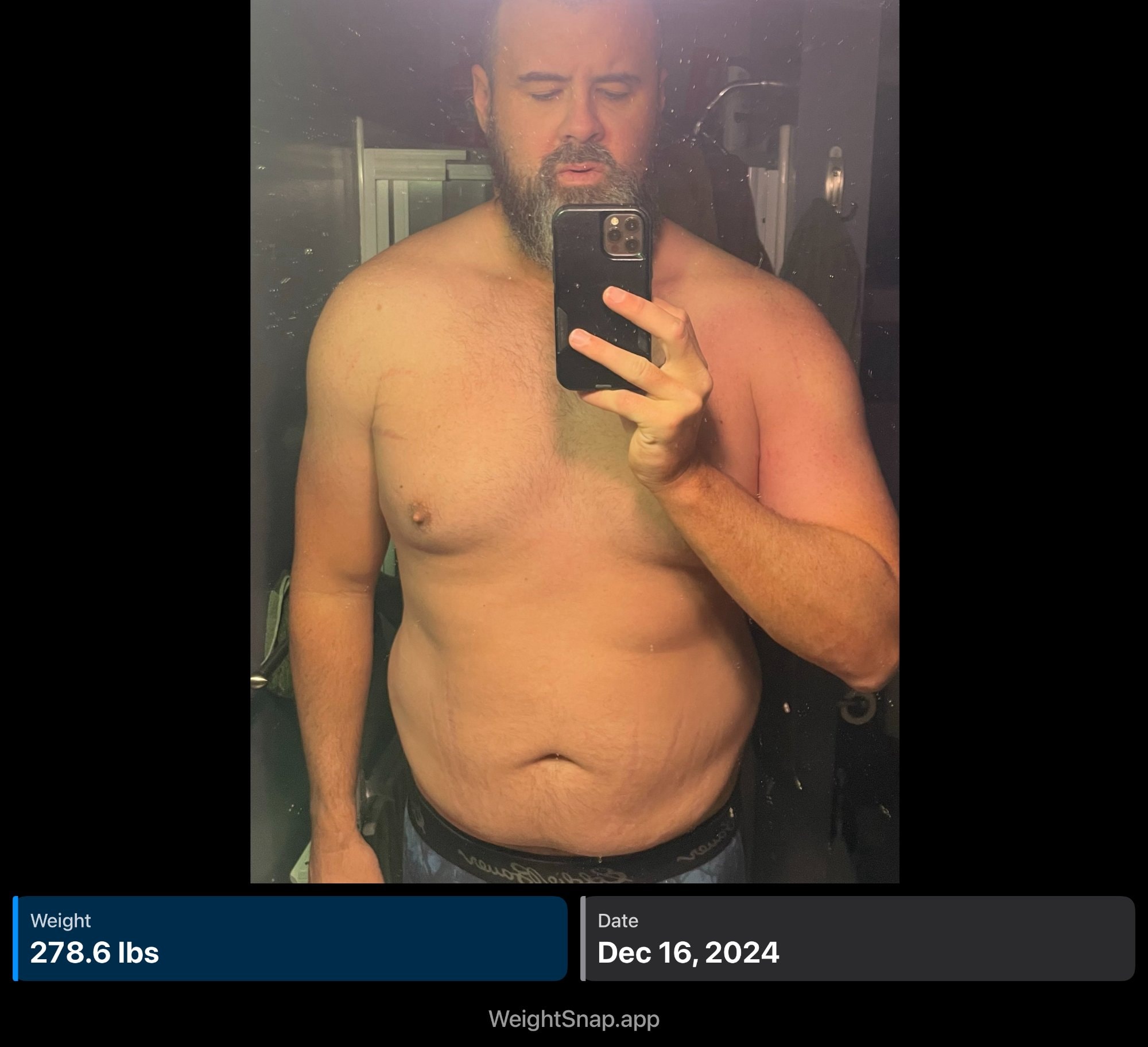
Initial reference
December 2024
278.6 lb photo label
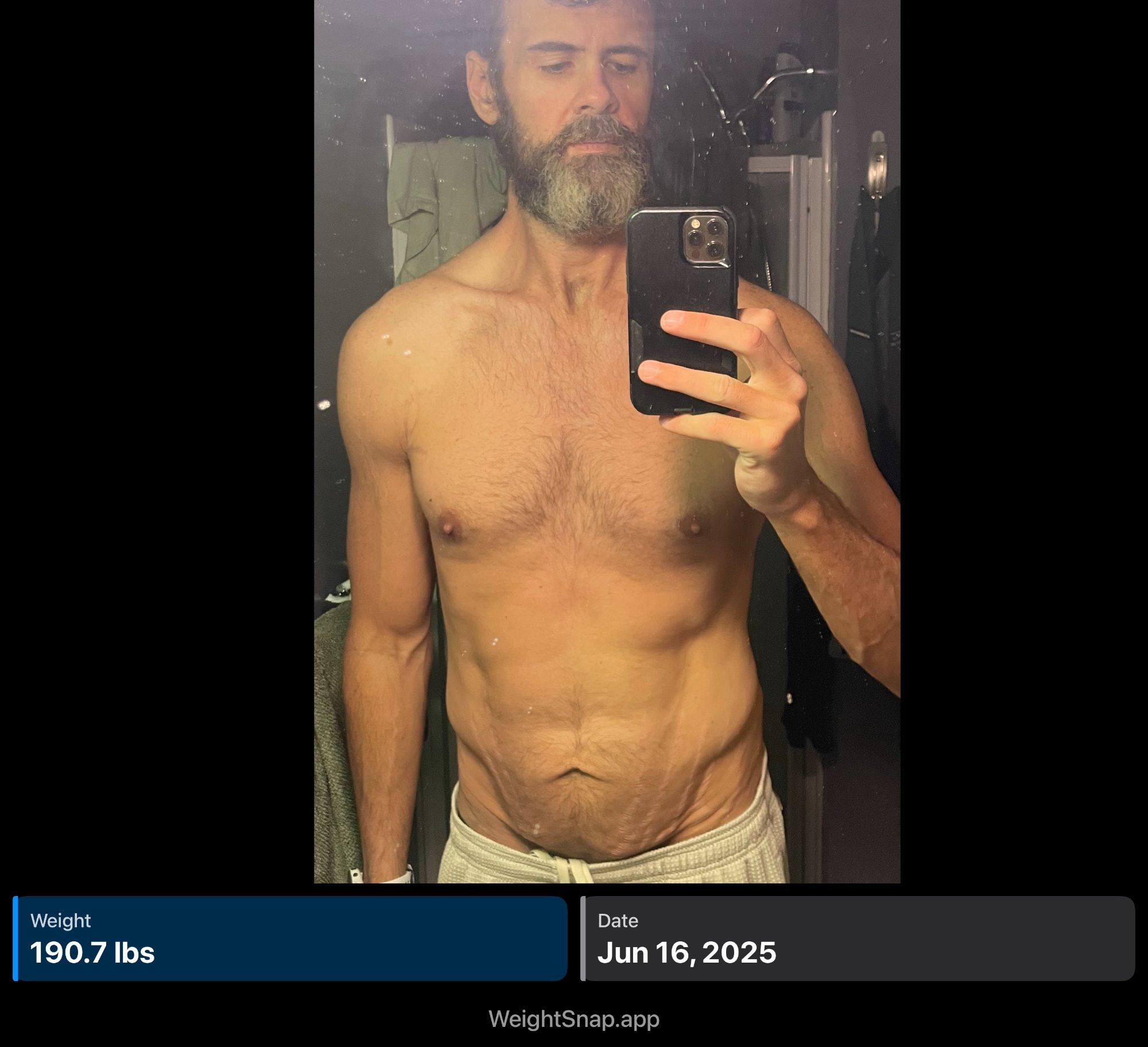
Lowest-point image
June 2025
190.7 lb photo label
Documentary source photography
WeightSnap / Tyler Brown · conditions vary · used with permission
Evidence boundary
Read this as a record—not a result to expect.
This account combines daily weigh-ins, photographs, reported compound exposure, exercise, travel, food intake, creatine use, and personal recollections. It is unusually detailed for a self-report, but remains one person's experience without a comparator, standardized protocol, clinician adjudication, or independent confirmation of the compound.
The reconstructed record
The full curve matters more than the headline.
The source's headline compresses a complicated sequence into one number. This reconstruction keeps the decline, maintenance, rebound, second decline, stop, and restart visible together.
Weight and reported exposure moved together—and around many other changes.
Six turning points
A transformation with a middle—and an aftermath.
Before-and-after framing hides the parts most useful for interpretation: changing routines, rebound, discontinuation, and re-exposure.
Before exposure
The source shows a historical peak in October 2023 and high-270s measurements during renewed gym attendance in late 2024.
The steep descent
Across four months, weight, reported exposure, food intake, and exercise were all changing at the same time.
The lowest point
The lowest monthly value arrived during a period the subject also described as high-volume indoor cycling.
The rebound
Creatine, higher intake, travel, less exercise, reduced tracking, and intermittent exposure accompanied the rebound.
A second decline
More consistent tracking and reported exposure preceded a return near 200 lb in October 2025.
Stop and restart
Appetite, sleep, libido, activity, and the perceived response changed again after stopping and later restarting.
The photographic record
Thirteen source images. One changing—but uncontrolled—view.
The photographs make the chronology tangible. They also show why visual change and measured treatment effect are not the same thing.
190.7 lb in photo
June 2025
A photograph records a moment—not a controlled measurement.
The monthly table reports 190.1 lb; this period also included high-volume cycling.
Lighting, distance, pose, crop, clothing, environment, and embedded labels vary across the series. Images establish chronology; they do not isolate fat, muscle, water, or treatment effect.
Reported experience
The number changed. So did the experience.
These are the subject's recollections—not incidence estimates, adjudicated adverse events, or proof that retatrutide caused each experience.
Appetite
Less food preoccupation and earlier satiety were reported during exposure; strong appetite reportedly returned after stopping.
Energy
Persistent fatigue was described, with low intake and high exercise volume as major possible confounders.
Sleep
Early waking appeared repeatedly in the narrative and reportedly eased during the period off.
Orthostatic symptoms
The subject described light-headedness and brief loss of vision when standing, alongside lower blood-pressure readings.
Skin sensitivity
A sunburn-like sensitivity was reported during higher-exposure periods and appeared again after restart.
Libido
Reduced libido was reported during exposure, improvement after stopping, and recurrence after restarting.
Confounder map
What moved alongside the scale.
A line chart can show sequence. It cannot isolate cause when many variables change together.
Case evidence vs. clinical evidence
What one account can show—and what it cannot.
A detailed personal record can generate questions and make lived experience visible. Controlled trials are needed to estimate average effects, compare groups, and characterize safety.
This case can show
Sequence and lived experience
- The order of reported changes over time
- Symptoms, routines, and rebound that a single photo omits
- Questions worth comparing with published evidence
Trials can estimate
Group-level effects and uncertainty
- Average outcomes under a defined protocol
- Differences between randomized comparison groups
- Adverse-event rates and statistical uncertainty
Editorial conclusion
The transformation is real to the person who recorded it. The explanation remains uncertain.
The most defensible reading is not that one compound caused every change. A large self-reported weight shift unfolded alongside changing exposure, appetite, exercise, diet, travel, tracking, creatine use, and seasonality—with meaningful symptoms and later rebound. That fuller record is more informative than the before-and-after alone.
Source. Based on Tyler Brown's first-person WeightSnap article, published March 7, 2026 and updated April 9, 2026. Values and experiences are author-reported.
Verification boundary. RetaGrade did not verify compound identity, measurements, medical supervision, administered amount, or causal attribution. Photography is used with the source's permission.